
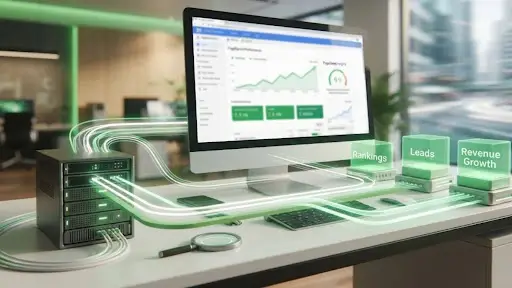
Website speed is often treated like a technical checklist item—something to improve after the “real” marketing work is done. That is a costly mistake.
For businesses investing in professional SEO services, website speed is not just a performance metric. It directly affects how Google evaluates your website, how users experience your brand, how many visitors convert into leads, and how efficiently your entire digital marketing strategy performs. A slow website does not only create a minor inconvenience. It weakens rankings, reduces visibility, increases abandonment, and turns qualified traffic into lost revenue.
At Ranks Grow, we treat website speed as a growth lever, not a cosmetic fix. It sits at the intersection of Technical SEO, Website Optimization, Local SEO performance, and conversion strategy. If your business wants higher Google rankings, better engagement, and more leads from organic traffic, site speed needs to be part of the conversation from the start—not something addressed after rankings stall.
Website Speed Is a Ranking Factor, But That Is Only Part of the Story
Google has made it clear that page experience and performance matter. But many businesses misunderstand what that means. They hear “website speed affects rankings” and reduce the issue to a narrow SEO task. In reality, speed impacts far more than where your pages appear in search results.
A slow website creates a chain reaction across your digital presence:
- It reduces crawl efficiency and weakens Technical SEO performance
- It increases bounce rates and lowers engagement signals
- It makes landing pages less effective at converting visitors into leads
- It damages mobile usability, especially for local searches
- It lowers trust by making the brand feel outdated or unreliable
- It wastes the value of traffic you have already worked hard to earn
This is why website speed should not be viewed only through a ranking lens. It is a business performance issue. When a website is slow, every part of the customer journey becomes less efficient—from first click to final inquiry.
Why Google Cares About Speed
Google’s goal is simple: deliver the best possible result for the user. A website that loads quickly, responds smoothly, and allows users to access information without friction creates a better experience than a site that stalls, shifts, or forces people to wait.
That is why speed is tied to Google’s broader evaluation of page quality. Search engines are not only measuring whether a page contains the right keywords. They are also measuring whether the page deserves visibility based on usability, structure, and performance.
In other words, website speed may not be the only reason a business ranks well, but it can absolutely be one of the reasons a business fails to reach its ranking potential.
Speed Impacts More Than Rankings—It Impacts Lead Generation
Businesses do not invest in SEO just to appear in search results. They invest in SEO to generate opportunities. That is where the real cost of a slow website becomes clear.
Imagine a business spends months improving content, strengthening Local SEO, and optimizing service pages. Traffic begins to grow, but when visitors land on the website, pages load slowly. The result is predictable: people leave before they convert.
1. It increases abandonment from high-intent visitors
When someone searches for a service and experiences delay, you create friction at the exact moment that trust should be building. A slow page can waste that opportunity before the conversation begins.
2. It weakens the performance of service pages
Your service pages need to load fast, communicate value clearly, and guide the user toward action. If those pages lag, the conversion path becomes weaker.
3. It damages mobile conversion rates
A large percentage of local and service-related searches happen on mobile devices. If a website performs poorly on mobile, businesses lose inquiries and calls.
4. It reduces the value of paid and organic traffic
It does not matter whether traffic comes from SEO, paid ads, or social campaigns. If the landing experience is slow, the efficiency of every channel drops.
The Link Between Website Speed and Technical SEO
At Ranks Grow, we rarely discuss speed in isolation because speed problems are often symptoms of broader Technical SEO and Website Optimization weaknesses. To learn more about our approach to these complex technical intersections, you can explore our company background.
When issues like poor image handling, bloated themes, or excessive scripts stack up, the site becomes harder to crawl and less efficient for users. This is why businesses should stop thinking of speed as a “developer problem” disconnected from marketing.
Why Speed Matters Even More for Local SEO
Website speed becomes even more important when a business depends on Local SEO to generate leads. Local search users are often closer to action; they are searching with intent to call, visit, or request a quote. Any friction during that process is costly.
If someone finds your business and clicks through to a slow site, you risk losing them to a competitor with a faster experience.
What Business Owners Should Prioritize
If your website is underperforming, the right response is not to panic. It is to take a structured approach to performance:
- Audit site speed as part of Technical SEO: Treat it as part of a broader SEO system rather than an isolated fix.
- Prioritize revenue-driving pages: Optimize your homepage and service pages first.
- Fix mobile performance aggressively: So much search activity happens on phones today.
- Reduce unnecessary website weight: Clean up unused scripts and oversized assets.
- Align speed with conversion goals: Ensure your fast site is also designed to guide users toward inquiry.
Final Thoughts
Website speed impacts Google rankings because Google wants to surface pages that provide a better experience. But the real business impact of speed goes far beyond rankings alone.
A fast website supports stronger Technical SEO, better Local SEO performance, higher conversion rates, improved user trust, and more efficient lead generation. A slow website does the opposite. In 2026, businesses cannot afford to treat website speed as an afterthought.
Ready to Turn Website Performance Into Business Growth?
If your website is slow, underperforming, or failing to convert the traffic you are already generating, our team is here to help. You can contact our team to discuss a strategy designed to improve rankings, increase lead generation, and strengthen your long-term digital performance.