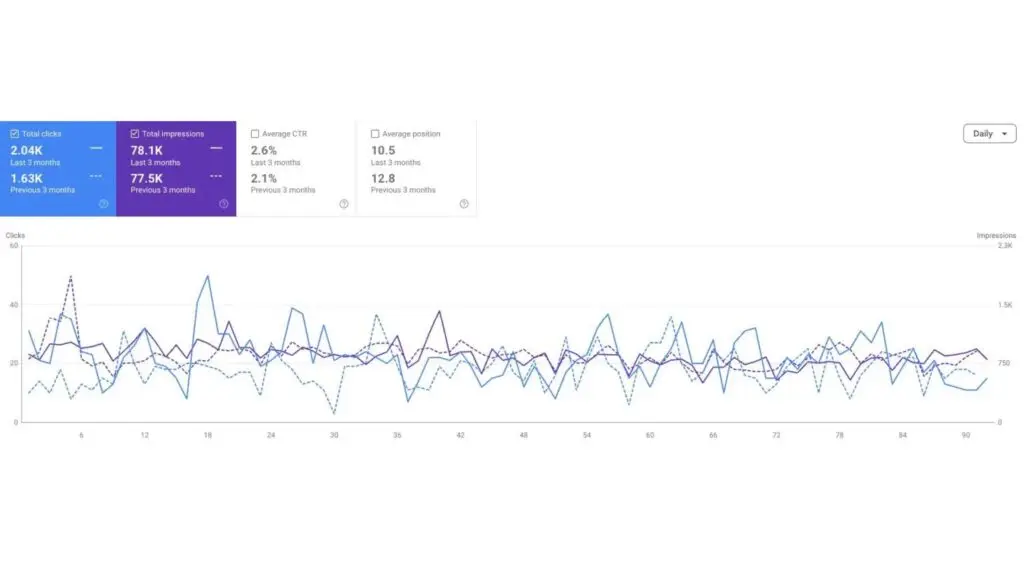
A family owned wheel and tire retailer was already showing up in Google for tens of thousands of searches every quarter, but most of those searches ended on someone else’s website. We focused on ranking and click-through rate instead of chasing new keywords, and turned the same search visibility into 25.2% more organic clicks.
At a Glance
| Detail | Summary |
| Industry | Automotive aftermarket (custom wheels and tires) |
| Business type | Family-owned, multi-location retailer with in-store installation |
| Region | U.S. Gulf South |
| Time frame | Last 3 months compared with the previous 3 months |
| Services delivered | Technical SEO, on-page optimization, structured data, local SEO |
| Organic clicks | 1.63K → 2.04K (+25.2%) |
| Average CTR | 2.1% → 2.6% (+0.5 points) |
| Average position | 12.8 → 10.5 (2.3 places higher) |
| Impressions | 77.5K → 78.1K (+0.8%) |
About the Client
Our client is a family-owned retailer of custom wheels and tires with showrooms across the U.S. Gulf South. They sell wheel and tire packages for cars, trucks and SUVs, carry a wide range of aftermarket wheel brands alongside the major tire manufacturers, and handle installation in-store. Flexible payment and financing options are a big part of how they win customers.
Most purchases start online. A driver searches for a wheel style, a size for their truck or a tire shop nearby, compares a few options, then visits or calls the closest location. That makes organic search one of the most important sources of new customers for the business.
The Challenge: Plenty of Visibility, Not Enough Clicks
When we reviewed the site’s Google Search Console data, visibility was not the problem. The site was already earning around 77,500 impressions per quarter, so Google was showing its pages for plenty of relevant searches. People just were not clicking through.
Two numbers explained why:
- Average position of 12.8. Most rankings sat at the top of page two, just out of reach of the majority of searchers.
- Average CTR of 2.1%. Only about one in every 48 impressions turned into a visit.
Our audit also surfaced issues that are common on image-heavy retail sites built with page builders: heavy pages, thin category and brand copy, FAQ answers that were generic rather than tied to products or locations, and no visible structured data to help Google understand the business, its showrooms and what it sells.
Goals and KPIs
- Move existing page-two rankings closer to, and onto, page one
- Raise organic click-through rate so existing impressions produce more visits
- Grow total organic clicks quarter over quarter
- Strengthen local signals so nearby buyers find the right showroom
Our Strategy and Process
At Ranks Grow, we start every engagement with the data a site already has. Here, the data told us Google trusted the site enough to show it; our job was to move pages up and make them more clickable. So instead of chasing new keywords first, we pointed our SEO services at the pages and queries sitting just below page one.
1. Technical SEO and Page Speed
Wheel and tire sites live on imagery, and that weight slows pages down, especially on mobile where most tire shoppers search. We compressed and resized product and gallery images, trimmed unused scripts and page-builder bloat, and cleaned up crawl paths so Google spent its time on category, brand and location pages. We cover the thinking behind this in our guide to improving website speed and performance.
2. On-Page Optimization for Page-Two Keywords
We pulled every query ranking roughly between positions 8 and 20 and mapped each one to the page that should rank for it. Then we rewrote title tags and meta descriptions around what buyers actually search for: wheel size, vehicle type, brand, installation and payment options. Thin category and brand pages got expanded, genuinely useful copy, and we strengthened internal links from the homepage and FAQ toward those pages so they carried more weight.
3. Structured Data and Better Search Snippets
Ranking higher only pays off if people click. We added Organization and LocalBusiness markup for each showroom, plus product markup where it fit, so Google had a clearer picture of who the business is and where it operates. We also rewrote the generic FAQ answers to address the real questions shoppers ask about fitment, tire brands, installation and financing.
4. Local SEO for Each Showroom
Because buyers want a store close to them, we strengthened the locations page and each showroom’s local signals: consistent name, address and phone details, Google Business Profile categories and services aligned with wheels and tires, and clear links between each profile and its matching page on the site.
Approximate Timeline
| Phase | Focus |
| Month 1 | Audit, technical fixes, image and script optimization |
| Month 2 | Title and meta rewrites, category and brand page content, internal linking |
| Month 3 | Structured data, FAQ rewrite, local SEO, monitoring and iteration |
The Results
Comparing the last three months with the previous three months in Google Search Console:
| Metric | Previous 3 months | Last 3 months | Change |
| Organic clicks | 1.63K | 2.04K | +25.2% (about 410 more) |
| Impressions | 77.5K | 78.1K | +0.8% |
| Average CTR | 2.1% | 2.6% | +0.5 points (+23.8%) |
| Average position | 12.8 | 10.5 | 2.3 places higher |
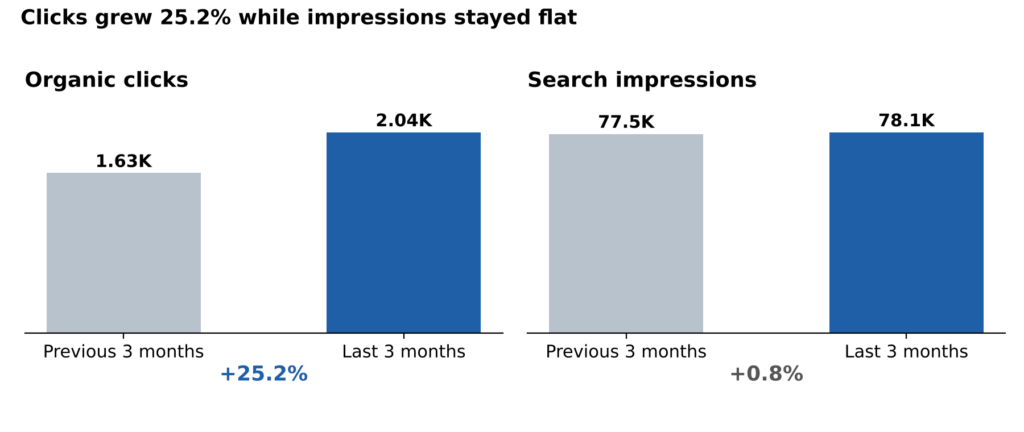
The impressions line is the most telling part of the story. It barely moved, so the extra traffic did not come from a seasonal spike or a surge in search demand. It came from the same searches, with the site ranking higher and earning a bigger share of the clicks.
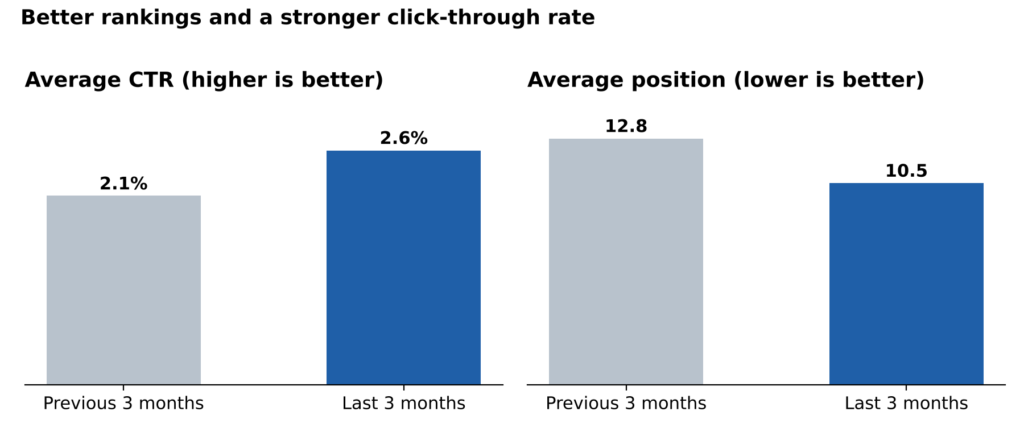
An average position of 10.5 puts the site right at the edge of page one, where small ranking gains bring outsized jumps in traffic. That is why CTR rose by almost a quarter alongside the ranking improvement.
What This Means for the Business
For a retailer that sells wheel and tire packages, each visit is a shopper close to a high-value purchase. Roughly 410 more of them per quarter, without paying for a single click, means more chances to win showroom visits, phone calls and financing applications.
Key Takeaways
- Check impressions before chasing new keywords. If Google already shows your pages, the fastest gains usually come from rankings and CTR.
- Page two is where the quick wins are. Queries ranking in positions 11 to 20 often need focused on-page work, not brand-new content.
- Titles and descriptions are sales copy. Write them around the buyer’s intent, not just the keyword.
- Speed matters more on image-heavy retail sites. Lighter pages help both rankings and mobile shoppers.
- Local signals connect searches to stores. Consistent location data turns nearby searches into showroom visits.
Want to see how this approach plays out in other industries? Browse our SEO case studies.
Want Results Like These?
If your site is getting impressions but not enough clicks, your next wave of growth is probably sitting on page two. Book an SEO consultation and we’ll show you which pages are closest to page one and what it will take to move them up.
Frequently Asked Questions
How long does SEO take to show results for a wheel and tire shop?
The results in this case study were measured over a three-month window against the three months before it. Technical and on-page fixes on pages that already rank tend to show movement sooner than new content, which usually takes longer to build visibility.
Why did clicks grow when impressions barely changed?
Impressions measure how often Google shows your pages; clicks measure how often people choose you. Better rankings and stronger titles and descriptions raised the share of searchers who clicked, so the same visibility produced 25.2% more visits.
What is a good organic CTR for an automotive retailer?
It depends on rankings and the mix of queries. Site-wide averages in the low single digits are common because impressions include many lower rankings. The more of your traffic that comes from page-one positions, the higher your average CTR climbs.
Do wheel and tire retailers need local SEO if they also sell online?
Yes. Most buyers want installation close to home, so searches with local intent drive a large share of sales. Accurate location pages and Google Business Profiles help those searchers find the nearest store.